
Process
How Colour Bodies Changed Porcelain Manufacturing
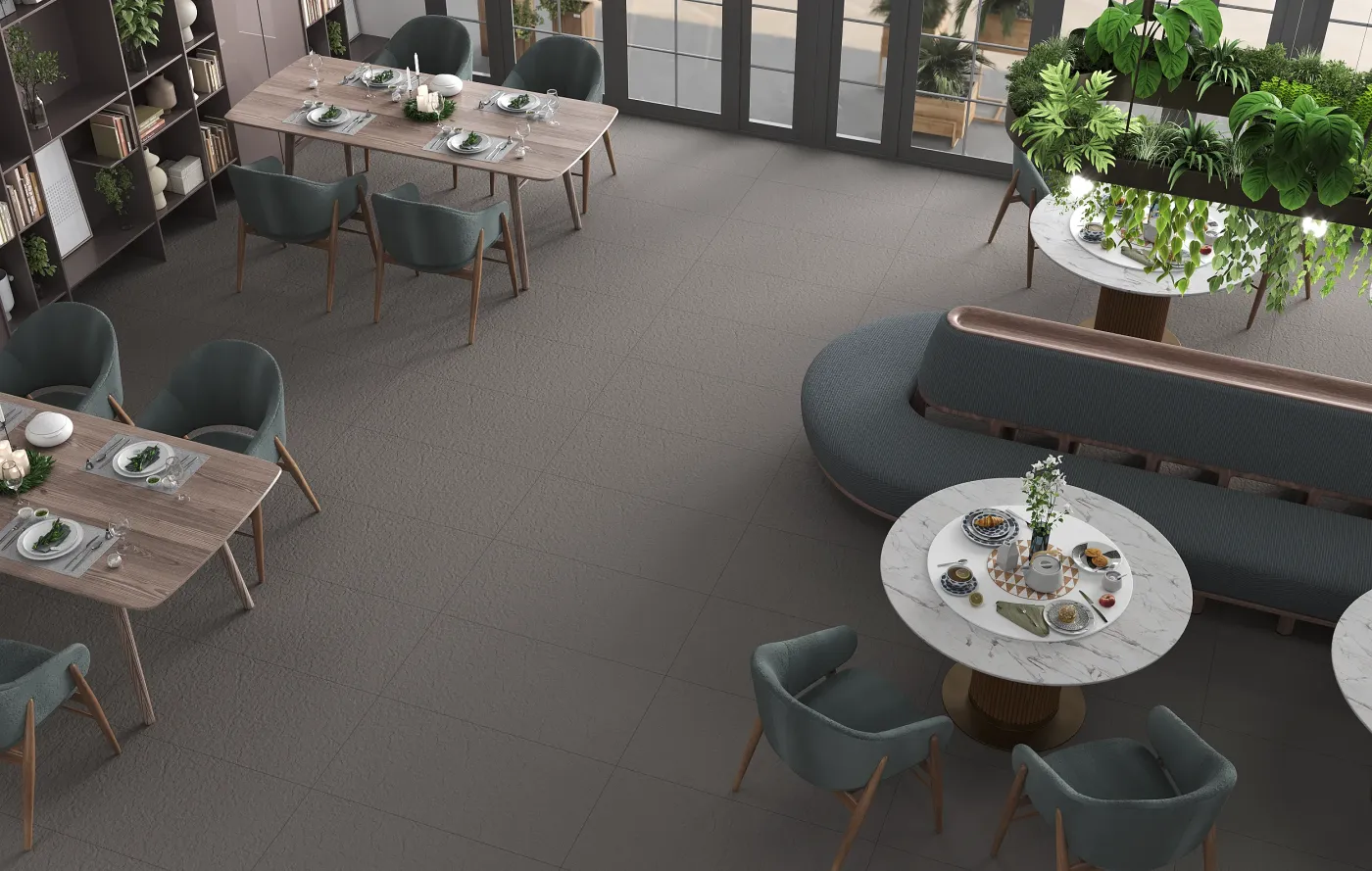
Full-body colored porcelain showing consistent color through edge and cross-section. Photography: Montilla Studio.
For most of porcelain tile manufacturing history, color lived on the surface. The glaze — a thin, glass-like coating applied before firing — carried all visual information and color. Beneath it sat a white or neutral body, invisible once the tile was installed but structurally critical.
This division of labor worked for traditional tile sizes and applications. But it created a visual problem at edges: where the glaze ended at a cut edge, the white body showed through, creating a stark line that read as unfinished. For large-format slabs and contemporary aesthetics, this was unacceptable. The solution — full-body color, or "colored bodies" — fundamentally changed how tiles are manufactured and perceived.
The Problem with Surface Glaze
A glazed tile's edge reveals the truth: white body beneath colored surface. When tiles are cut on-site (at inside corners, penetrations, or custom dimensions), the cut edge is undeniable. It disrupts the visual continuity that modern design demands.
For small tiles in traditional formats, the edge could be hidden by trim or grout. For large slabs, there is nowhere to hide it. The edge becomes part of the material's expression, and a white edge contradicts the aesthetic of a continuous colored surface.
Manufacturing Colored Bodies
In colored-body production, pigment is mixed directly into the clay body before pressing and firing. The color runs through the entire thickness of the tile — not just the surface. When the tile is cut, the edge reveals the same color as the face. The material reads as monolithic and intentional.
This requires precise control at the mixing stage. Iron oxides, titanium dioxide, and other pigments are measured and blended into the clay slip. The pigment must survive firing temperatures (typically 1200°C+) without degradation, breakdown, or unintended reactions with the clay body.
Dark colors (blacks, deep grays, charcoals) are more stable than light colors, which is why the darkest colored bodies became the manufacturing standard first. Lighter colored bodies require more precise pigment chemistry and firing control to prevent color shift or mottling.
Performance Implications
A colored body is not just aesthetics — it is structural integrity. Because pigment is distributed throughout the material, there is no visual distinction between the glaze layer (hard but thin) and the body (softer but substantial). The tile reads and performs as a unified whole.
Stains and scratches on a colored-body tile are less visible because the color is consistent through the depth of any wear. A glazed tile, once scratched through the glaze layer, reveals the white body beneath — a permanent mark. A colored-body tile scratched to the same depth maintains visual continuity.
For high-traffic commercial applications, this is a practical advantage. The material ages gracefully because the color is inherent, not applied.
Cost and Specification Complexity
Colored-body production is more complex than traditional glazed tile. Pigment sourcing, mixing precision, and firing management all increase manufacturing cost. A colored-body slab is typically 15–25% more expensive than a glazed equivalent.
But for architects and designers, the specification advantage is significant. You can specify a colored-body tile with confidence that every edge cut on-site, every installed finish condition, will look intentional and complete. There is no "raw edge" problem.
The Future of Tile Manufacturing
Colored bodies have moved from premium exception to mainstream specification for large-format slabs. Most contemporary porcelain ranges now offer colored-body options alongside traditional glaze. This reflects changing market demand — architects increasingly want the visual coherence that full-body color provides.
For small-format tiles, glazed surfaces remain standard. But for anything above 30×60 cm, specifiers are moving toward colored bodies because the edges matter more when the tiles are larger.
This shift in manufacturing reflects a deeper change in how contemporary design relates to materials: not as applied finishes but as substances with coherent identity throughout their depth.