
Projects
Outdoor Terraces: 20mm Porcelain vs. Natural Stone
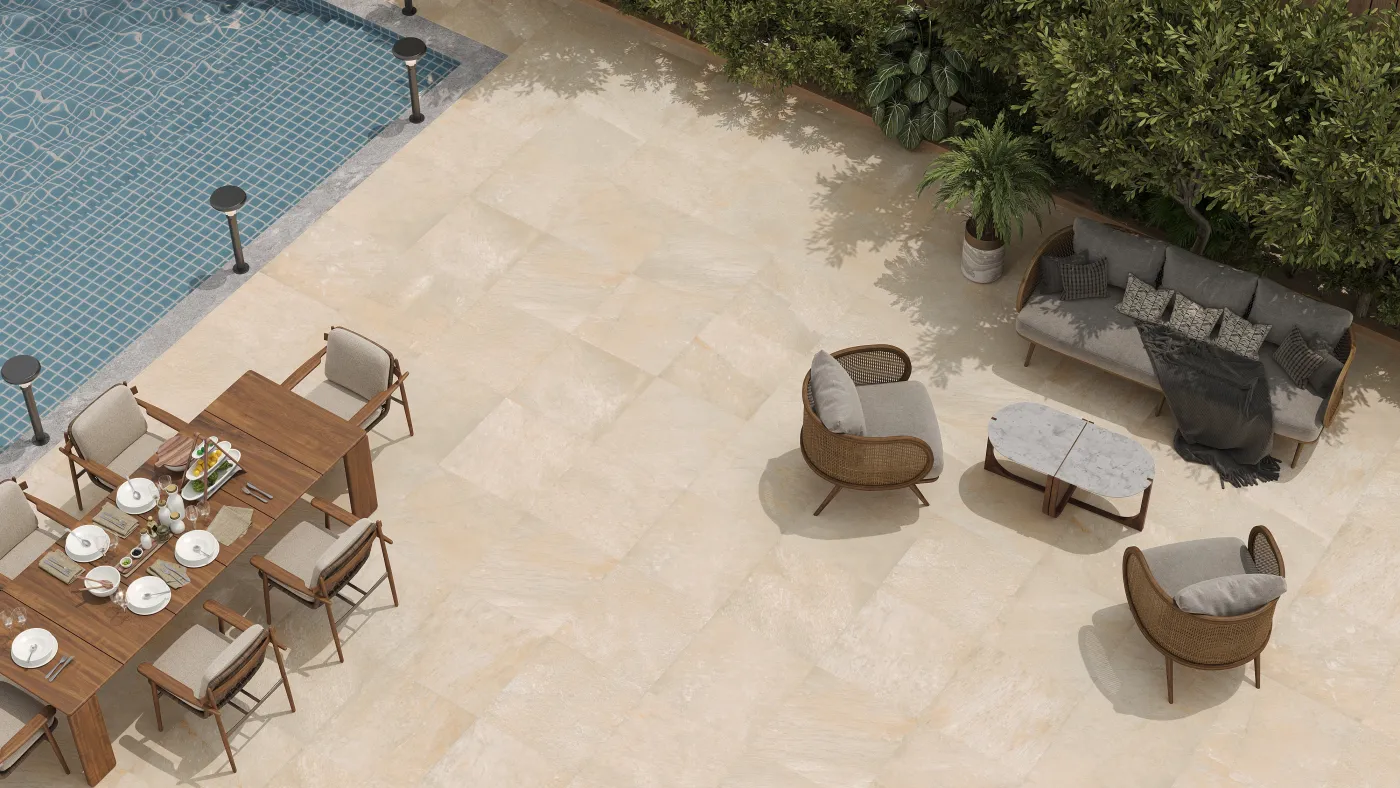
Large-format outdoor terrace installation. 20mm porcelain slabs with minimal joint lines. Photography: Montilla Studio.
Outdoor terraces operate in conditions that separate the practical from the theoretical. Freeze-thaw cycles, UV exposure, water retention in porous surfaces, thermal stress from temperature swings between sun and shade — these are not design considerations, they are material constraints that dictate survival.
When specifying surfaces for an exposed outdoor terrace, the choice between natural stone and 20mm porcelain slabs is determined almost entirely by performance data, not aesthetic preference. Both materials can look identical. Only one performs identically when weather is the variable.
Freeze-Thaw Cycles: The Critical Threshold
In climates with winter freezing, water trapped within a porous material expands as it freezes, creating internal pressure. Stone — even granite — is susceptible to this. Repeated cycles cause micro-fractures that accumulate into visible spalling (surface breakdown and flaking). Marble and limestone, being softer than granite, fail more quickly.
Porcelain's water absorption is functionally zero. No water enters the material. No freezing. No spalling. In freeze-thaw climates, 20mm porcelain is the only rational choice for outdoor installation.
In Mediterranean and warm climates without freeze cycles, this constraint is less critical. But even mild winter rainfall can cause problems with stone over 20+ years. Porcelain remains superior.
Load Ratings and Pedestrian Impact
20mm porcelain is engineered for outdoor loading — pedestrian traffic, furniture weight, the concentrated loads of heels and casters. Its modulus of rupture (breaking strength) is typically 50+ MPa, far higher than most natural stone.
Natural stone breaks more easily under point loads. A dropped tool, a piece of furniture dragged across the surface, even high heels on certain stones — these create chip risk. Porcelain's hardness absorbs impact without degradation.
For terraces with lounge seating, dining tables, or bar carts on wheels, porcelain's durability removes maintenance risk entirely. Stone terraces develop visible wear and damage over a decade of normal use.
Anti-Slip Classification: R11 and Beyond
When a terrace is wet — from rain, pool splash, or washing — slip resistance becomes a safety issue. Standards for outdoor surfaces define R-ratings based on coefficient of friction (CoF). R11 is the minimum safe threshold; R12 and R13 provide higher slip resistance.
Polished or honed natural stone (the finishes that look the best) can slip dangerously when wet. Achieving R11+ requires textured finishes that compromise the material's aesthetic.
Porcelain can be manufactured with anti-slip surface texture (lappato finish, structured surfaces) without visual degradation. The material looks refined while meeting R11+ safety ratings. This is a significant specification advantage, especially for pool surrounds.
Color and UV Stability
Natural stone fades in strong sunlight, especially lighter colors. The UV exposure that defines outdoor environments can bleach reds, yellows, and warm tones over years. Insurance companies sometimes exclude natural stone color fading from warranty precisely because it is inevitable.
Porcelain's colored body is UV-stable by definition. The color seen on delivery is the color 25 years later. No fading, no sun damage, no warranty questions.
Installation and Jointing
Natural stone requires careful joint detail to prevent water pooling and penetration. The standard practice is slope joints away from structures and use high-quality grout and sealant. Even with these precautions, water finds pathways through joints and under the stone.
20mm porcelain slabs can be installed with 2mm tight joints that shed water efficiently. The tighter joint reduces standing water and ice accumulation in winter. The larger format (typically 120×240 cm or larger for outdoor) means fewer joints overall, reducing points of failure.
Specification Checklist for Outdoor Terraces
- Water absorption: 0.5% or below (porcelain only)
- Thickness: Minimum 20mm for load and stability
- PEI rating: 5 (highest) for high-traffic areas
- Anti-slip: R11 or R12 minimum for pool/wet areas
- Modulus of rupture: 50+ MPa
- Joint width: 2–3mm with appropriate outdoor-rated grout
- Installation method: Appropriate for outdoor thermal movement
Stone fails most of these criteria without specialized finishing and detailing. Porcelain meets all of them as standard, delivered from the factory.
Conclusion
Outdoor terraces in freeze-thaw climates should be porcelain. Terraces in mild climates can use stone, but porcelain offers superior long-term performance and zero maintenance burden. The specification choice is not a close call once the performance data is understood.