
Materials
Stone or Porcelain? A Guide for Architects
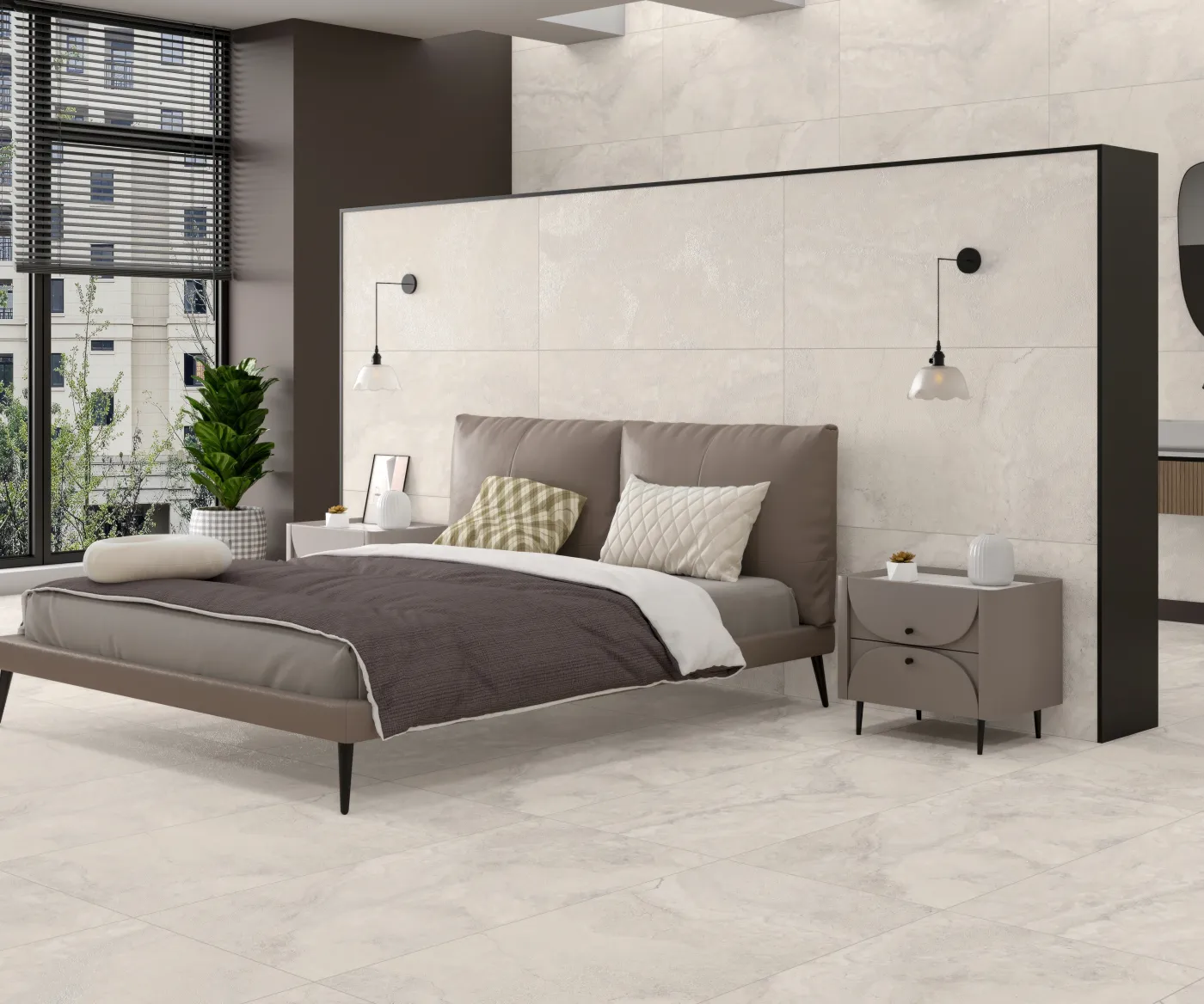
Porcelain slab installation with natural stone comparison detail. Photography: Montilla Studio.
When an architect specifies surfaces for a new project, the decision between natural stone and engineered porcelain has become unavoidable. Both materials occupy the same aesthetic and functional territory. Both can be specified at scale. And yet the choice carries weight — across budget, maintenance schedules, warranty terms, and the long-term appearance of the building.
The comparison is no longer about capability. Modern porcelain tiles and slabs can replicate the visual character of marble, granite, limestone, and slate so convincingly that the distinction is often invisible to the eye. The real question is about performance, cost, and the practical realities of specification and maintenance over a building's lifetime.
Visual Character and Design Range
Both materials offer extensive design range. Natural stone's geology creates genuine uniqueness — no two slabs of marble are identical, which some architects embrace as a feature and others find risky. Porcelain's digital printing allows perfect consistency within a batch, which is either a virtue (predictability) or a limitation (no geological variety), depending on your design intent.
For projects requiring visual continuity across large areas — a commercial floor that must read as one unified surface, or a residential kitchen where the veining should feel coherent — porcelain's consistency is an advantage. For projects celebrating geological uniqueness and variation, natural stone remains unmatched.
Water Absorption and Durability
This is where the technical gap emerges. Porcelain's water absorption is effectively zero (below 0.5% for Pure Vitrified tile). Natural stone absorbs water — even marble, even granite. Once water enters the substrate, it can freeze in winter cycles, creating micro-fractures and spalling. It can carry stains deep into the material, making surface cleaning insufficient.
In wet areas, outdoor terraces, pool surrounds, and climates with freeze-thaw cycles, porcelain's impermeability is a genuine performance advantage. Stone can perform in these environments with proper sealing, but requires ongoing maintenance commitment.
Maintenance and Cost of Ownership
Stone demands protective sealing upon installation and re-sealing every 12–24 months. It stains easily; acidic substances (vinegar, lemon, wine) can etch marble and limestone. It scratches more readily than porcelain. Over a 30-year building lifecycle, the maintenance cost — materials, labor, downtime — accumulates significantly.
Porcelain requires only basic cleaning. No sealing. No re-sealing. No etching risk. It resists stains and scratches. The warranty is often 25–30 years with zero maintenance requirements.
For commercial projects with tight maintenance budgets and high foot traffic, this cost-of-ownership gap is decisive. For residential projects where character and the patina of age matter aesthetically, stone's required care may be accepted as part of the material's identity.
Cost at Specification
Natural stone is typically 30–50% more expensive per square meter than quality porcelain at the point of specification. But installation, sealing, and ongoing maintenance narrow that gap significantly. Porcelain's lower total cost of ownership makes it increasingly competitive on commercial projects with long timelines.
Making the Choice
Stone remains the choice for projects where geological uniqueness and tactile character are central to the design. It performs well in dry environments and low-traffic residential spaces. Porcelain is the rational choice for consistency, durability, and low lifetime maintenance — especially in wet, high-traffic, or commercial contexts.
The distinction is not better or worse. It is about reading your project's real constraints and choosing the material that aligns with those requirements, not with received wisdom about what surfaces "should" be made of.